Le Monde (EUSKARA)(CASTELLANO)(FRANCÉS) (
Dear readers, from the coldness of scientific analysis after each catastrophe, may these reflections serve, firstly, to send all our solidarity and support to the families of the people who have lost their lives after the floods in Valencia, Castilla-La Mancha and Andalusia, as well as to all those affected. And secondly, to reflect on what happened so as not to make the same mistakes again, not only in these communities, as anyone can be immersed in a similar situation, but in all of us who are learning and internalising that many of the control formulas of the past no longer work, as we now live on a different Planet.
Strategic withdrawal once again emerges as the only solution, however radical (at the root), that tackles the problem and which, with Sandrine Morel, we discussed at the end of the interview in Le Monde. Many so-called advanced states, such as some in the USA or in Europe, including your country, France, have already implemented compensation and strategic withdrawal policies, not as a defeat, but as the best tool to guarantee the well-being and tranquillity of their communities, withdrawing from those areas that we conquered in a thoughtless and irrational way to favour speculative interests, exposing thousands of people to increasingly violent threats. Even here in Navarre, we are timidly beginning to understand that returning the river to its territory is the only solution to guarantee security in the face of the wave of extreme events that has only just begun.
Peace and Good being
Antonio Aretxabala
* * * * * * * * * * * * * * * * * * * * * *
Antonio Aretxabala, a geologist and natural disasters expert, analyzes the reasons behind the high death toll and devastation following the floods that killed almost a hundred people in the Valencia region.
In an interview with Le Monde Antonio Aretxabala, doctor of Geology at the University of Zaragoza and an expert in natural disasters, explains how the rising temperatures of the Mediterranean Sea and the extensive urbanization of flood-prone areas in the Valencia region created the disaster that claimed almost 100 lives on the night of Tuesday, October 29, following a «cold drop» episode in southeastern Spain.
Torrential rains and flooding are nothing new to southeast Spain, but they seem to be increasingly destructive. Why is this so?
The temperature of the Mediterranean Sea continues to rise as a result of global warming. This summer, it broke records once again. As a result, the atmosphere is warmer and full of water vapor.
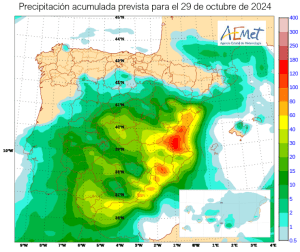
Now, when the warm, humid Mediterranean wind from the Levant meets a strip of cold air from the North Pole, as it did on Tuesday – a so-called isolated high-altitude low («DANA» in Spanish) or «cold drop» – it causes torrential rain. It’s a meteorological phenomenon made all the more extreme by the fact that the air is charged with millions of tons of water due to the rise in temperatures. For example, around Valencia, for more than eight hours, nearly 500 liters per square meter fell; an exceptional intensity. This normally corresponds to a year’s rainfall.

France and Central Europe have also seen major flooding in recent weeks. Are we talking about the same phenomenon?
In all these cases, the Mediterranean’s warming is dynamite. The higher temperatures rise, the more water vapor enters the atmosphere. And the smaller the energy difference between the North Pole and the Equator, the more cold air currents tend to separate, wander, undulate and reach further and further south.
These extreme weather phenomena will continue to increase in frequency and intensity as we experience the real consequences of climate change.
At the same time, we are coming from a situation of prolonged severe drought on the Spanish Mediterranean coast. Is there a link between these two phenomena?
In the same way that tongues of cold air are moving further and further south, warm air masses are moving further and further north. With climate change, there are more and more extreme episodes: droughts are longer, rainfall is more violent. It’s a kind of climate chaos, and that’s no surprise. Scientists have been sounding the alarm for 30 years.
The damage in Valencia is particularly serious. How do you explain it?
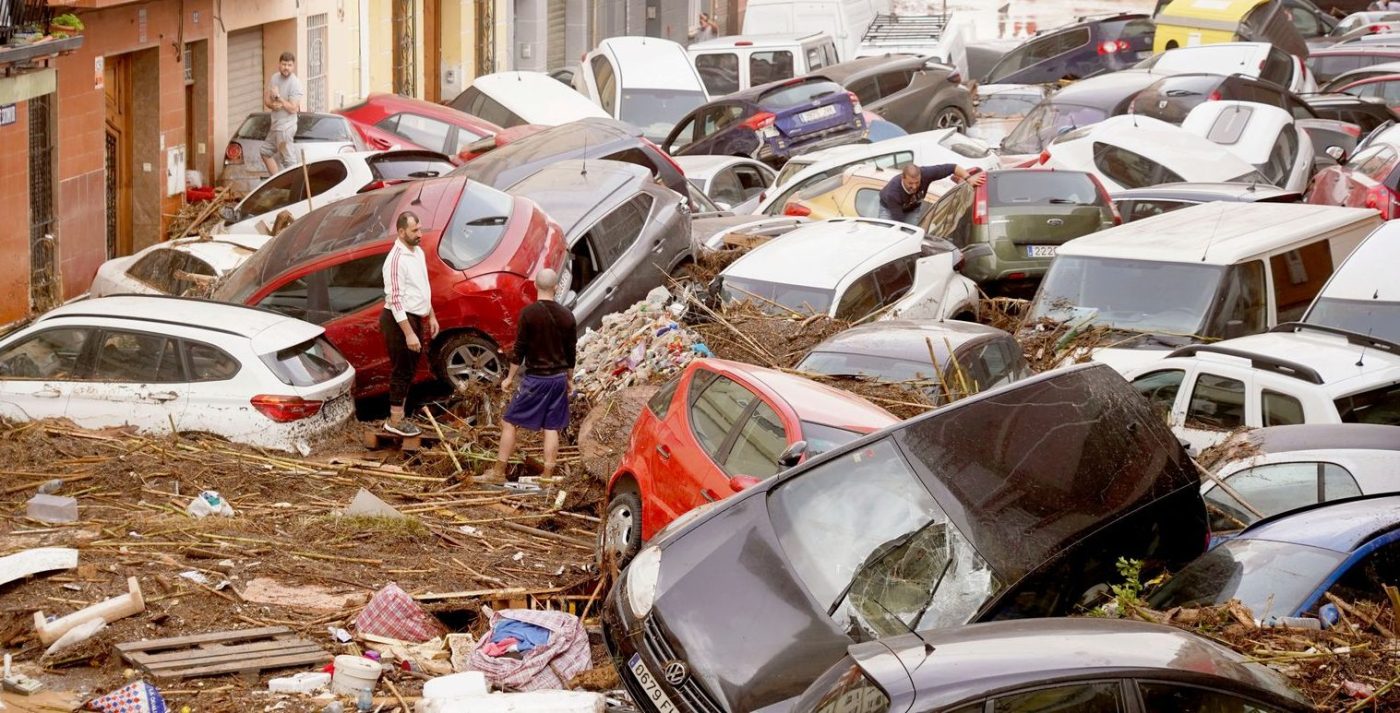
Spain is the country with the most dams in relation to its surface area. This created a false sense of security, based on the idea that we could control floods, absorb excess rainfall and gradually pour it into the discharge channels, without risk. Since the 1950s and 1960s we built in flood zones, very close to rivers, and poured concrete in all directions, which led to the loss of soil permeability. In the Valencia region, in particular, the floodplains have been heavily urbanised. However, dams and ramblas (natural channels for the evacuation of watercourses) are not sufficient to cope with flows like the one we have seen these days.
In your opinion, it is likely that this type of episode will be repeated?
Yes, in fact, there is only one solution, the strategic withdrawal: to compensate the people living in these flood zones and find them accommodation elsewhere, to correct the mistakes we made in the past. It is not a matter of thinking that we have lost the war against nature, as some present it, but of finding a way to live in symbiosis with it. This takes time and money, but if we don’t want to continue to lose lives and spend millions of euros endlessly to rebuild what has been destroyed, there is no other solution…
* * * * * * * * * * * * * * * * * * * * * *
For Radio Euskadi: «Floods: The Mediterranean’s warming is dynamite»
