
(Castellano) (Euskara)
28 April 2025 was presented as the day of the highest renewable energy production in Spain (wind and solar), whose goal is to reach 56% renewable energy this year. This achievement was to be used to promote an image of Spain as a renewable energy producer to the rest of Europe. Instead, it was followed by a blackout described by all the media as historic, which in some autonomous communities lasted less than an hour, but in others many hours, with all the consequences that this entails.
The blackout itself produced the opposite image to the one it was intended to spread, as it reflected poor management and an inability to manage this energy.
What it also showed is that a system in which we place all our trust can collapse completely and so quickly. Suddenly 60% of the country’s energy disappeared. It seems impossible, and it is still a source of confusion.
And it always shows us how dependent we have become on energy, both socially and economically as well as individually, and how vulnerable we are when it is suddenly missing. The blackout immediately provoked anxiety and uncertainty among people, who soon became almost hysterical. People couldn’t communicate, couldn’t shop, couldn’t work… Many couldn’t even ride a bike (and we already depend on it a lot for deliveries), because even for that you need electricity!
In this atmosphere of hysteria, and infected with the political and economic instability of the last few months (tariffs, possible attacks, recommendations in the event of a disaster). The speculation soon began, and with it some conspiracy theories: from a fire in France that burned part of the grid supplying Spain, to the opposite, the supposed Spanish energy disconnection from the rest of the EU. The following day, the ENTSOE reported that the electricity system had been restored ‘thanks, among others, to the support of the resources of the electricity system such as hydroelectric plants and the existing interconnections with France and Morocco’.
Another theory pointed to cyber-attacks, with all eyes on the Russians, etc. Proposals also began to be put forward (yes, as is often the case, without yet knowing the situation): that fossil fuels (thermal and combined cycle) are necessary to sustain the system, or that thanks to nuclear power the system had not collapsed completely.
But little by little something is becoming known. But ‘all bets are off’ and ‘lie, lie, lie, something remains’. The nuclear power plants also collapsed and also needed a lot of energy to restart. Energy that they deprived the rest of the pool of and that made recovery more difficult. They took the longest to recover. A day later (24 hours) the Spanish electricity system was free of nuclear power and electricity distribution and use could be re-established, although far from contributing to overcoming the problem, as some (their lobby) believe, what it does is generate more problems, as well as its inherent and inevitable risk and contamination.
As for gas-fired plants, CSIC (Spanish National Research Council) energy expert Antonio Turiel has already denounced that five emergency blackouts occurred in Spain in 2024 and that one of the reasons was that gas-fired plants were not ready to operate as an alternative to the missing energy (see below for a transcript of the interview). At the time, Turiel concluded that someone thought ‘it was cheaper to pay for the disconnection than to burn gas’. But then the consequences were not as serious as now, when the whole country (and Portugal) came to a complete standstill (with different durations).
Now, in an interview with Onda Vasca, Turiel shared his opinion once again. According to him, the problem was that ‘a lot of renewable energy has been integrated without adequate stabilisation systems’, because renewable energy is very heterogeneous, intermittent, it is not as inertial and regulable as other energies, and it is difficult to integrate massively into a large-scale centralised system. Turiel criticises that, again, the reason why such systems do not exist is to lower costs (and thus increase profits, of course).

This risk of blackout was in fact warned by the European Network of Transmission System Operators (ENTSOE) to Red Eléctrica Española (Spanish Electric Net) (REE) itself if it continued with this policy of integrating energy from renewable sources without alternative back-up. Previously, in April, Beatriz Corredor’s own president assured that there was no risk of an electricity blackout and denied ENTSOE itself. Now, two days after the blackout, she has appeared to say that ‘nothing has gone wrong’. But contradicting herself, because if that is the case it is hard to understand why she also says that ‘today it will not happen again (…) because they have learnt’, without explaining what it is that they have supposedly learnt. As in other cases, and as we are used to, Corredor also refuses to resign.
But why would she resign? She does not hold public office. She was a politician, but not now: REE was created in 1985 and privatised in 1999 (the state retains a 20% stake). Perhaps, the failures that resulted in the blackout are due to that privatisation. What is clear is that its monitoring is now more opaque and easier to avoid responsibility. Perhaps the maxim that justified the sale of public services to private companies in order to improve their management does not always hold true. Once again. Joan Balfegó in Nueva Revolución writes that REE has been oriented towards private profit to the detriment of security and sustainability. Corredor was a politician, but not now: she was Minister of Housing in Zapatero’s government from 2008 to 2010. Therefore… Beatriz Corredor’s appointment… was another case of REVOLVING DOORS. The umpteenth politician to move from the institutions to an energy company!
But again, the problem, despite the large production of renewables on 28 April 2025, was not this, because in Europe many countries exceed in renewable energy production and there is no such problem. Again, it is a question of how to incorporate it, how to synchronise the whole system.
But whether the problem is an excess of renewables and their management or not, what is clearly observed is that far from considering this energy production as an energy transition (the one that institutions and companies constantly repeat to us) to alleviate the environmental and climate debacle and the reduction of resources, in reality it corresponds to continuing with the same levels of consumption and waste, or even exceeding them. This is evident in the indices they wanted to surpass, in the exports they want to sell and in all the consumption they want to add to the existing ones (high-speed train, electric cars and so on). And let’s remember that this increase in production and consumption, despite being sold as renewable, also has a huge impact on the environment, on the landscape, on resources, on the territory and on our communities.
At this juncture, thank goodness calm has returned, but all that was missing was Elon Musk to add fuel to the fire (remember that we were in total analogue mode). The billionaire has warned of a global ‘electricity drought’. He is also honest about the reasons, blaming it on the growth of artificial intelligence and data centres, and electric vehicles. But it is clear that despite this, he is not going to stop pocketing millions as he also communicated from X that ‘Tesla Powerwall and Starlink should continue to operate’. Yes, Starlink in particular is of vital necessity for humanity. To calm things down, he also stated that ‘competition for AI superiority is likely to cause World War III’.

The blackout also coincided with the 6 months of the DANA, the catastrophe that devastated Valencia. On the same day, the 6th demonstration had been called to demand resignations for the mismanagement of the disaster, something that politicians still do not recognise and do not accept. Without a doubt, the metropolitan area of Valencia knows what it is like to be without electricity, because in many cases, despite the fact that it has been 6 months, many of the basic needs have still not been restored. Yesterday they experienced a new episode that lasted until late in the evening. With the exception that yesterday Mazón, who refuses to resign, did request the emergency from the central government.
Curiously, for example, the blackout affected Portugal, but not the Balearic Islands or Ceuta and Melilla (nor the Canary Islands, I suppose). This is obviously because they have their own way of supplying themselves, which shows that in order to ensure supply it is best to opt for local, decentralised systems, which also means to be self-produced. This avoids energy losses, avoids large infrastructures, and avoids more environmentally friendly forms of production. Decentralised distribution makes sense if your area is also continually hit by extreme weather phenomena (as we know, mostly resulting from or exacerbated by the climate crisis). In countries like Cuba or Puerto Rico, after numerous occasions of seeing their grids devastated by cyclones, this is quite clear to them.
Another beautiful coincidence, which above all made me very excited because it was something we studied and raised many years ago, is that a few hours after this was writen, I received a message on the channel of my neighbourhood, Amarotz (Tolosa), calling for an assembly to start a process to establish an Energy Community in the neighbourhood! I hope it goes well and that it materialises. Amarotz as a neighbourhood has all the possibilities, as has already been shown with so many community proposals, activities, composting, etc. Everything that is empowering, self-organising and regaining power over our resources and lives is on the right track.
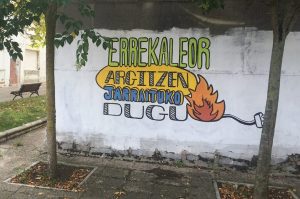
In this regard, it should also be noted that at least one Basque town council managed to cope with the blackout, precisely because they have developed their own energy community: Aramaio. And it is a coincidence that this same municipality and its community oppose a macro renewable energy project on the summits of its mountains. ‘Macro’ not because of the number of wind turbines but because of their dimensions, because the project includes windmills 200 metres high! If Aramaio is capable of self-sufficient energy supply, it goes without saying what those windmills will be for. I imagine that this was also the case for the community of Errekaleor (Gasteiz) (in wikipedia), which managed to generate its own energy a few years ago, pushed, above all, by the exclusion of the companies themselves from the grid, by Iberdrola, in 2015.
The blackout brought up reflections that reminded us of those that arose at the time of the pandemic. And others that reminded us of stability and our habit of living undisturbed and with an excessive use of energy. Reflections on the difference in energy consumption between rich and poor countries, on the stability of neutral services. By the time this was happening here, Cuba is experiencing a prolonged energy crisis.
We were reminded of the situation in Ukraine, who, curiously enough, had offered energy aid (!!!) to the Spanish government. There, all the power plants have been targets of war. Not to mention the situation in Palestine. Or Rojava, where Turkey has also targeted hydroelectric power plants and they survive with autonomous generation groups. Because another obvious conclusion is that energy concentration and centralism affect energy vulnerability, because large power plants can be targets, and also many more people affected.
Meanwhile, one of the best articles comes from Mexico, specifically from La Jornada: El colapso de la red española (The collapse of the Spanish grid). Interesting, is it because we are not able to make an analysis here? Are we still lacking evidence? I guess it’s because we didn’t have electricity. Because even to write we need electricity nowadays!
And by chance, one day after the blackout I find that Netflix is releasing a new series: El Eternauta, based on the famous Argentinean comic. The series begins with a blackout in the city of Buenos Aires that can be seen from a boat. In the city there is a ‘cacerolazo’ demanding the reestablishment of electricity. The blackout even affects 4 of the main characters, and what’s worse, their game of mus. That’s all there is to it.
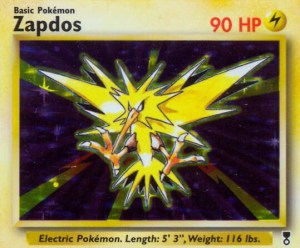 Another coincidence: my son watches Pokemon cartoons. In this episode they suffer a blackout. So, yes, they are more frequent than we think. Not knowing what happened, they manage to find out who caused it, which might be interesting for our institutions: the blackout was caused by a legendary Electric/Flying-type Pokémon named Zapdos.
Today, from my bike, I also witnessed a silly man doing a wheelie on his large motorbike on the Santa Catalina bridge. It’s not one of those idiots who advertise Repsol. ‘How nice’, I think to myself, ’energy normality has been restored, and with it, people’s confidence!’

TURIEL: ‘Spain made FIVE EMERGENCY POWER OFFS in 2024’
The disconnection of large industrial consumers from the electricity grid: what was envisaged as an absolute emergency system in case of an unlikely failure of several systems of the electricity grid at the same time. In other words, in the case of a breakdown of a large power plant, we could consider the simultaneous shutdown of a nuclear power plant or two nuclear or nuclear power plants, or any other type of problem which, together with adverse weather conditions, could lead to both a problem of supply and a problem of high demand for electricity. This is what this system is designed for, and yet this year I don’t know exactly what Antonio will tell us, but for the fourth or fifth time we have witnessed this disconnection of large industrial consumers, something that obviously should not happen, and we have a system that is enormously over-dimensioned, given that we are in a situation where we have to remember that we are in a situation of over-supply. Despite the fact that we have several million more inhabitants than in 2007 and yet we have an electricity production system that is considerably larger than then in terms of capacity and yet we find ourselves in this predicament when it comes to being able to meet demand at the worst times. Well, Antonio Turiel, if you would like to tell us a little bit about this anecdote or about this recurring fact, as I was saying, which is no longer an anecdote. What is happening with the electricity system and how this is a reflection of the flaws in the design of the electricity system, as you describe it, or as you call it, the Industrial Renewable Electricity System.
The first thing I wanted to comment on is the issue of electricity consumption: electricity consumption has been falling since 2008 and right now, consumption levels are comparable to the first years of the 21st century (consumption between 2004 and 2005) because we have had an accumulated fall of 12% or more since 2008, it is not a fall that is not constant, but the trend is clearly downward and also contrasts with what the system was doing before 2008, which was an exponential process. There has been a problem here – there have been many problems but basically the biggest problem I see is a triumphalist discourse of ‘we are going to make a renewable transition based on a massive installation of large renewable electricity production systems, large parks connected to the high voltage grid with the idea of centralising this production and taking it to large centres of consumption – in other words, centralising consumption – when in reality renewable energy does not have the right characteristics to do this on a massive scale. As in everything else – and this is important to say – because people have a tendency to approach debates in a very binary way: all or nothing, yes or no, and this is not the case. I mean, the fundamental issue here is scale: Is it possible to integrate renewable energy with massive systems at a high voltage? Yes, at a certain scale. The problem is when you try to go beyond this scale. You start to find that renewable energy, because of its characteristics, is an unreliable energy and very different from the energy that is usually generated, from the energy that is usually generated, from the energy that is usually generated, from the energy that is usually generated, from the energy that is usually generated, from the energy that is usually generated. you start to find that renewable energy, due to its characteristics, is unreliable and very different from what is usually generated, from what has historically been generated in the electricity system.
It is also worth remembering that there is a renewable system that we curiously always exclude because it has always been there. In fact, it is the first massive system of electricity generation before thermal power stations, which is hydroelectricity, hydroelectricity. It is a much more reliable form of electricity production than the new renewables, which is basically wind and photovoltaic, and that is due to the fact that it has a series of technical characteristics that allow it to provide very reliable electricity. And what are these technical characteristics? Well, basically what you are doing is turning a big electric alternator that weighs several tens of tons and that is good because, in case you stop it, it has a lot of inertia. These are systems that are inertial: they retain that waveform. Let’s remember that what we transmit to the grid is a wave.
There is a tendency to compare electricity to a fluid, as if it were water. This is not true: it is a movement. Moreover, it is a wave-like, inertial movement. As I said, it is dispatchable – that means that when you need it you put it in, if you need more you put more in, if you need less you put less in, and it is a fast response system. In that way it is similar to the other systems that appeared later, which are the thermal power stations, in which in essence what you do is burn a fuel to heat a pot of water, which produces steam and this steam drives a turbine.
The former Secretary of State for Energy a few years ago in the United States said that if Thomas Alba Edison woke up today he would recognise thermal power stations at first glance, because they are basically just steam power stations, and it is a bit sad, in that sense we have not achieved a better use of energy than burning something, even atoms, to produce heat, to heat a pot of water, to move a turbine, which is what ends up moving the alternator that produces electricity.
All these systems generate a type of electricity that is very stable, very inertial, dispatchable, very adjustable, which is very good (nuclear is less so – it is not so adjustable, it is more fixed) and suddenly you start to put in systems that don’t work like that: that are intermittent, that sometimes there is and sometimes there isn’t, that can be there and then suddenly they slacken or suddenly their production goes up a lot. Then we start to have network management problems. Grid management problems are becoming very common. In fact, the European electricity grid manager (there is a manager in each European state and then there is a supra-manager to coordinate them all, which is called ENTSOE) reports that there has been a very large increase in incidents with the electricity grid of the frequency separation type, which is when grid stability problems begin, because the wave is not perfect. It doesn’t end up making a sine wave, it doesn’t end up being perfectly synchronised with all the electricity generation systems and it starts to have problems that can even cause overloading of the grid and can sometimes cause very serious breakdowns, and this is due to the fact that there has been a huge increase in the amount of renewable energy that has been connected (wind and photovoltaic).
This forces you to have backup systems for two reasons: first, because they are intermittent, because sometimes you have them and sometimes you don’t have them. And secondly, because even when you have them, they go their own way, because they are not dispatchable, they are not inercible; they come in with more or less force as they feel like it, and of course this generates a lot of problems within the grid.
The issue of the rapid response system, and here specifically the case of Spain: what has happened during these months is that it is a system that is effectively designed for an emergency situation. It is a system whose conception is a technical necessity to manage the grid in a smooth way and avoid startling surprises and possible breakdowns. This response system is based on a very simple idea: if at any given moment there is a breakdown, for example of a power line, because lightning strikes and a high-voltage tower is charged, or you have a power plant of a certain importance that is disconnected from the grid for whatever reason and by the time those that replace it come in, there is a certain delay (the problem is that the power grid, as I have said before, like what I have said before, has a certain delay), As I said before, as what is being transmitted is a movement, you have to produce exactly the same energy that is being consumed at each moment – it is a terrible mess, very complicated to do – you don’t have to be producing exactly the same energy that is being asked to be consumed because otherwise there will be overloads or there may be problems with the power grid, but you have to be able to produce the same energy that is being consumed at each moment.
You don’t have to be producing exactly what you are asking to consume because otherwise there will be overloads or there may be blackouts), what you do is to certain companies that are large consumers of electricity you say ‘Look, I am going to offer you electricity at a significantly cheaper price, with a fairly substantial discount, but in exchange every year you have to have a bag of hours in which if I need it I disconnect the network with a minimum notice of 15 minutes’. This means that these companies accept to work under these conditions in which you say ‘I sell electricity with a very substantial discount (I don’t have the contracts, but they are big discounts that are given to these companies) but you should know that out of 1000 hours a year, or 2000… those that are contracted, I can switch you off. I will let you know 15 minutes before’. This is designed to manage eventualities. This system is not really new, because it is an update of a system that already existed before. This is designed so that when these interruptions occur, they last 15 minutes, half an hour and that in the end what is mobilised out of everything that can be mobilised, what is stopped out of everything that can be stopped in all the companies, is a relatively small amount. You have a pool of companies that you can stop if you want to, which is equivalent to a consumption of up to 1 Gw. Let’s think that in Spain the average electricity consumption is about 26 Gw – this is the average. But it varies according to the time of year, as is normal, and it also varies according to the time of day. And it varies a lot. You can at certain times, for example, when it’s night time in the spring maybe the consumption is only 10 or 12 Gw, but you can have that in the summer the peak times can be as high as 40 and 41 Gw.
In this rapid response system, what we have is basically an availability of the consumption of these companies, which are intensive companies that are always on, of up to 1 Gw of power. In other words, in a moment of need, you can withdraw this 1 Gw of consumption by simply lowering the switch to these companies. The idea is to use it sparingly, among other things because it is there to cover eventualities (things that you cannot foresee). Its purpose is not to be used as another market asset.
So what has happened in Spain? In Spain we had two moments of activation, both of which were prolonged, in which the entire reserve capacity was deactivated (the entire 1 Gw – 900-odd Mw), at the end of May and at the beginning of July. In both cases it was for the same reason: there was a lot of PV generation at that time. We are talking about spring, the optimal time for PV: you have good insolation and also the air temperature is not very high (because you know that PV when the temperature is rising also lowers its performance – the performance of PV is not the best at times of maximum insolation but the times when the insolation is not yet the maximum but it is good and the temperature is moderately low as it is in spring). This happened at the end of May and at the beginning of July, twice, and in both cases the problem arose because the models of the Spanish electricity grid, the company Red Eléctrica Española (REE), which manages access to the grid and is constantly monitoring and making all the calculations and forecasts, counted on the wind power provided by the atmospheric models. But as we are in a changing climate, things don’t work as well as they used to and, suddenly, that Gw or so that was supposed to be produced by wind power didn’t materialise, because wind is what it is: it is intermittent in time and space. Maybe it is said that a lot of wind blew, but maybe it blew 200 km away in the middle of the sea or in a place where there were no wind turbines and nobody could take advantage of it. So they found that they had to deal with the fall in photovoltaic production with the fall of the sun, but the wind power was not there.
So they were forced to use all the hydroelectric power they had, and, thank God, the reservoirs were quite full, all the thermal power that was available… but then we had a second surprise: the combined cycle gas plants that should have been there idling to be on standby if necessary, to provide back-up, were switched off.
(i.e. what we were talking about at the time, which was probably what should have happened and was finally confirmed).
Now there is a very good analysis that Guillem Planisi made a few months ago and in detail it clearly shows what happened then. In the specific case of Spain, the installed power of five combined gas plants is very large, 26/27 Gw. It practically covers the average consumption and think that there is also nuclear power. . It practically covers the average consumption and think that there is also nuclear power. In reality, if you keep these plants idling, they can cover you without any problems if you make a good forecast. The problem of maintaining these plants: remember, we are talking about a turbine that weighs dozens of tons, which also supports very high temperatures and very high pressures – you can’t turn it on and off like the blender in your house – its start-up process between heating up and getting up to speed and so on takes many hours: between 10 and 12 hours depending on the model – there are faster plants, designed to give a quick response that are called pickers and even then these plants typically require a couple of hours to get up to speed – but the plants that exist in Spain were not designed for this, and many of them have response times of 10 and 12 hours.
It is reckless to shut down plants that could be needed. There were plants that were up and running, because they were counted on, but those that were not theoretically mobilised by Red Eléctrica (and here we must also consider to what extent Red Eléctrica’s mechanisms are appropriate) were shut down. Because the electricity companies do not want to burn gas if it is not going to be sufficiently remunerated (because it is not that it is remunerated, but that it is sufficiently remunerated – here he finally dropped the small detail that Iberdrola has a debt of 48,000 million euros, because it could be that it also has something to do with all these problems that are happening).
And this would be a bit like what happened in May and in July there have been three more days, which makes a total of five this year for a mechanism that is intended to be exceptional and all three occurred in the first week of December – three in a row – and in all three cases, for me, it is even more serious than the previous situation, because in all three cases, someone armed with one of the most dangerous weapons of mass destruction that humanity has invented, an Excel sheet, came to the conclusion that it was cheaper to pay for the disconnection than to burn gas. Because we are in a situation, as you know, where natural gas is becoming very expensive for various reasons, but mainly because we are having a winter that is within historical normality, that is to say, it is a winter that is cold. It is not even a particularly cold winter, what is happening is that we were used to the winter not really being cold and in fact these days in Europe at the end of the year and at the beginning of the year 2025 we are going to experience an anomaly of warmer weather (about 6 or 8 degrees warmer) in central Europe.
This is very curious because since the blowing up of the North Stream pipelines what we are seeing is that Europe is in a very precarious situation with regard to gas. All it took was a few days of cold weather (about 10 days of cold) and little photovoltaic production (because this phenomenon occurs, which in German is called the dunkelflaute, meaning that there is little photovoltaic production and little wind production), obviously because the skies are overcast and there is not a bit of air blowing, for the gas reserves that were being used to produce electricity with the combined cycle gas power plants to fall by 25%. In 10 days in December, Europe consumed 25% of its gas reserves.
And here too it is important to get away from the usual triumphalism of the big experts that Europe’s gas reserves are ‘at 100%’. When someone gives me a percentage, I always get a bit defensive, because to me the percentage is like saying ‘we are going to go to a 100% renewable model’: I say ‘I say that too’. What is important to know is how much that amount is, to have the absolute figures. So the big problem with natural gas reserves is that natural gas is a difficult substance to manage and the countries in Europe that have storage capacity for a longer period of time, what they store represents their average consumption of about 6 weeks. So, if you happen to be at a time of higher consumption, which is typical of winter, then perhaps all the natural gas stored in Germany, which is one of the countries with the largest storage capacity, is equivalent to three weeks of winter. So in the end they depend on there being a continuous flow of gas coming in, because with only what they have in storage they would polish it off relatively quickly.
If you have a situation of low renewable production and also with the cold weather you are throwing gas at it like a beast, and despite the fact that gas is still being imported and by the way another thing that must be said: Russian gas is still being imported, and in large quantities, and Spain acts as a hub for redistributing liquefied Russian gas to other countries.
(to be continued)
