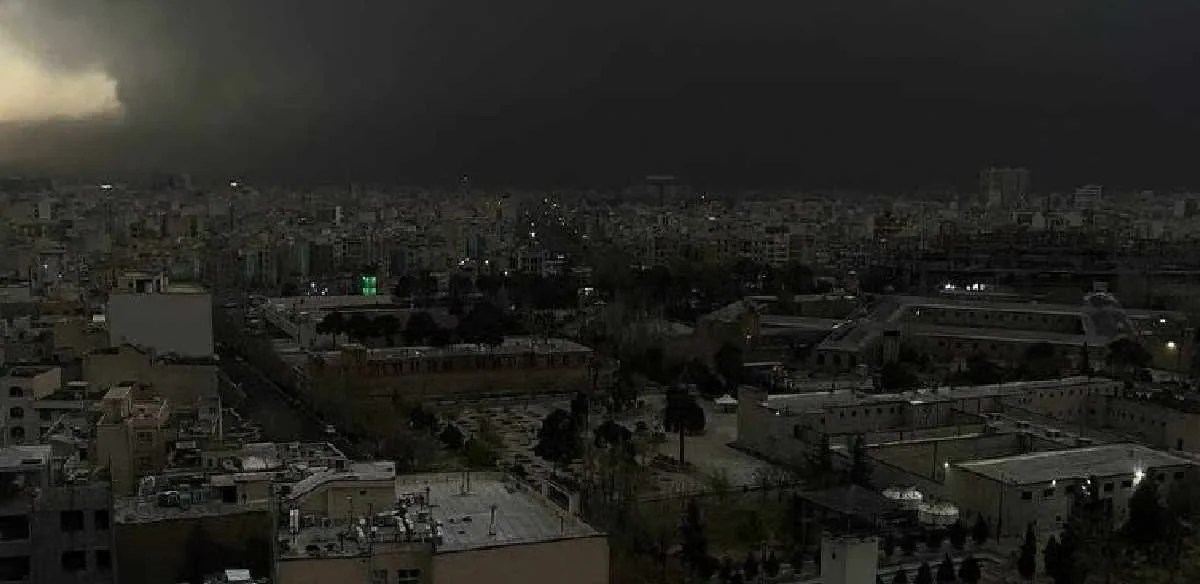
(Euskara) (Castellano)
Since the start of 2026, what we have witnessed —along with an escalation of violence and war on a global scale and the resulting instability— capitalism’s dependence on fossil fuels. First came the invasion of Venezuela, then the intervention in Iran and the subsequent actions against U.S. allies and the Strait of Hormuz. But there are also lesser-known projects, such as the East African Pipeline and many others going on now in Africa. The fossil fuel industry shows no signs of s of slowing down despite having reached its inevitable peak, now in the U.S. as well. Against this backdrop, we have efforts to break free from this dependence such as the Fossil Fuel Non-Proliferation Treaty Initiative and the Conference on the Transition Beyond Fossil Fuels they have organized. It will take place from April 24 to 29, 2026, in Santa Marta, Colombia. We hope the rest of the Planet will listen and join in. Our very survival depends on it.
The U.S. intervention in Venezuela in January 2026 made several things clear:
- that the current Trump administration is capable of anything
- that it will continue the long history of interventions and invasions, regime changes, and puppet governments masquerading as democracy
- that it will reinforce the imperialist stance that its massive military is tasked with imposing its will
- that it wants to maintain international dominance
- that it doesn’t care about endangering people’s lives
- that it is highly irresponsible and capable of entering into dynamics that are very dangerous for international relations
- that it disregards the democratic system, official procedures, and decisions endorsed by various institutions, and that it holds the Power
- etc., etc.
But what we really see is that all that deployment, those deaths, that attack on democracy, on a foreign government, on the international community, that enormous expenditure on the operation, etc., etc., was ABOVE ALL motivated (ONCE AGAIN) by control of oil. This was admitted by Trump himself, to the international community’s surprise, after months of claiming that his previous attacks were due to drug trafficking (the level of cynicism, international deception, greed, and betrayal was also laid bare… A reality check). Just as happened with Iraq. Just as happened with Libya. Just as happened with Iran before. Another war over oil!
Another war over oil? Now? While that fleet of Teslas parks in the White House garden? Now that coal-fired power plants have been shut down, Low Emission Zones are being implemented, and we’re constantly being presented with renewable energy projects? After so many years of discussing at COPs and other forums the need to phase out fossil fuels, the urgency of reversing the climate crisis— now another war over oil?
The other harsh reality revealed by the war in Venezuela was that our dependence on oil is still enormous. The other reality is that the empire still craves it, and that international control still depends on it. The other realization is that they don’t care about continuing to burn it —something we already knew— but what wasn’t so clear was to what extent, or in such a brazen manner. The other realization is that despite such a massive rollout of renewables, despite that so-called Energy Transition in vogue, we remain the same, and the real transition is about who keeps their hands on the black gold.
The Peak of Fracking
Another observation is that peak oil is advancing inexorably. Peak oil has been and continues to be debated. But now, this peak oil theory is even accepted by the official organ of the fracking industry, Shale Magazine1. This is how they put it in the magazine: “The concept was popularized in the 1950s by geophysicist Shell M. King Hubbert, who predicted that U.S. oil production would peak around 1970. That prediction was initially correct.”2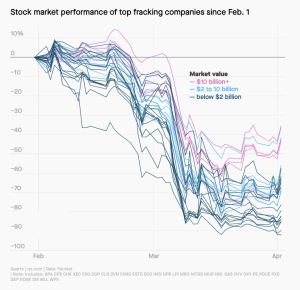
Yes, Hubbert’s predictions from the 1950s came true, and the U.S. entered an oil crisis that led to the 1973 crisis. Ironically, at that time the U.S. also needed Venezuelan oil, and Israel provoked another war with its neighbors (the Six-Day War with Syria and Egypt, also due to expansionism).
So far, so good. But of course, Shale Magazine had to add something to justify its own existence: “But (Hubbert) didn’t account for the eventual surge in unconventional oil—especially from shale—which temporarily reversed that decline decades later.”3
That’s right: fracking was developed intensively, especially starting in 2005, to make the United States once again one of the leading producers of oil and gas. In 2019, after 67 years, the U.S. exported for the first time! But then what? As had already been predicted and as we now observe, that industry has collapsed because there is only so much oil/gas in a reservoir, and likewise in shale rocks where reserves are minimal. Once extracted…
One of the main extraction areas (such a scattered presence cannot be called a reservoir), the Permian Basin, already declined by 20% last year. The CEO of one of these fracking companies, Diamondback Energy, Travis Stice, told his shareholders last year that “It is likely that U.S. onshore oil production has peaked and will begin to decline this quarter.” Diamondback, like other companies, has scaled back its extraction activity—and consequently its workforce. (See more at Crisis Energética and Antonio Turiel‘s web-pages).

It’s curious what the U.S. learned from the previous oil peak and collapse. To paraphrase Bill Clinton: “It’s the economy, stupid,” or perhaps we should say “capitalism”: extract, produce, and consume without a care for tomorrow as long as you’re making a profit, and then we’ll see.
Now no one remembers what was proposed with the fracking; no one is telling us about the disaster that industry has caused in recent years. Above all, no one tells us what has become of many of those companies. They have filed for bankruptcy. The peak came in 2019 with 42 companies (in the Exploration and Production sector), doubling the number of companies that collapsed the previous year, with a debt of $26 billion. Since then, the peak has continued to decline.
Wars for Oil
But now that we’re in this situation, the U.S. is left with what it does so well: instigating a war, an invasion, or overthrowing a government, and seizing its resources. As Trump made very clear, that Venezuelan oil is “his” oil.
But getting back to the point, we already know that Trump is the quintessential climate crisis denier, and also one of the driving forces behind the fossil fuel industry, as he even had interests in some of those fracking companies. That was another of his slogans, “Drill baby drill,” back in 2008. As we can see, he’s sticking to it.
Now they are bombing Iran with Israel’s collaboration. While Venezuela ranks first in the world in terms of oil reserves (304 billion barrels), Iran ranks third: 209 billion barrels (according to the U.S. Energy Information Administration (EIA)). They are bombing Iran because it has acted against Israel, but above all, taking advantage of the fact that the Iranian people have taken to the streets by the thousands to demand freedom, only to be massacred. Taking advantage of this situation, it appears that the U.S. is acting on behalf of these people against the Islamic regime, but as we see, these actions strengthen the regime and create chaos in the region (over a vast area). Yet the U.S.’s own indiscriminate massacre contradicts this, as it is even worse than that committed by the regime.
In this case, Trump hasn’t stated it as he did with Venezuela, but considering the reasons given there, it wouldn’t be far-fetched to think that in Iran as well, if the reason isn’t to establish peace, then it’s also to get their hands on its oil (in addition to, as in the Venezuelan case, removing a government that doesn’t align with its policies). Trump has already confessed to CNN that “he doesn’t care if Iran becomes a democracy”5 and that if the regime were overthrown, he would put whoever he wanted in power. Democracy, US style.
[Today we also read that apparently it was not the US that initially decided on the attack on Iran, but rather an Israeli decision, which, in a sense, the US had no choice but to join. Then, given its weight, the U.S. assumed leadership of the operation. According to the anti-authoritarian Lebanese historian Elia Ayoub in an interview with CrimethInc., it was also the Israelis who bombed the Iranian oil depots, a move that did not sit well with Trump. According to Ayoub, “which means they didn’t even coordinate together,” which is particularly serious given the consequences all of this is having. Yet another sign that Israel has grown accustomed to doing whatever it wants with total impunity, and that, despite everything, it always counts on U.S. support.
I hope it rains… gasoline
In that context, amid that indiscriminate attack on Iran, there are also targeted objectives, such as gasoline depots. As we see in Ukraine, places where energy is produced or stored are key targets because they limit the enemy’s mobility and economy. In the case of Iran, the attacks produced massive plumes of oil smoke. From a climate perspective, it’s a disaster, just as all these wars and destruction are proving to be. But the environmental impact was immediate, as it caused acid rain. As chemical scientist Gabriel da Silva explained, it was more than that, because in addition to acids, those rains contained “large amounts of other pollutants harmful to humans and the environment”6
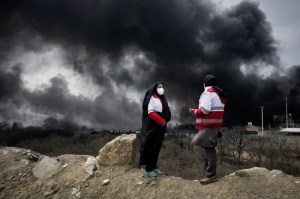
Obviously, the danger lies in breathing them in, so the population was advised to stay indoors with the windows closed (although now those homes are also military targets!). But the problem is that once returned in the form of rain, these pollutants settle in waterways and on the ground, contaminating everything. The fossil fuel industry is causing long-term disasters and other immediate ones.
This situation was unfolding while the population of Meatzaldea (Euskal Herria/Basque Country) was gassed once again. The Petronor refinery (a Repsol subsidiary in the Basque Country) its very close to the towns of Muskiz and Abanto-Zierbana. On February 22, the flares burned for hours, producing spikes in volatile organic compounds (VOCs): benzene, toluene, and xylene. But four days later, on the 26th, a new incident occurred in an oil tank, generating another spike. All of this is in addition to the CO2 it constantly emits: 2.6 million tons of CO2 per year. As if wind farms could ever offset all that!
Added to these technical lapses are logistical failures and the inaction of the authorities, who took 10 hours to implement emergency measures while the population was exposed to high concentrations of VOCs for hours.
In the end, the population was placed under lockdown (as in Iran), which is also tragic. It must be said that these incidents are merely two more additions to the long list of cases to which this population is constantly exposed.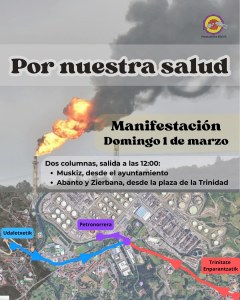
The health rights organization Osalde denounced in a statement that “This is an example of how neither SOS Deiak, nor the Department of Industry, nor the Department of Health is prepared to deal with risk situations arising from incidents at industries subject to the Seveso regulations”7 and “the degree of irresponsibility of the Department of Health.” Local resident, doctor, and activist Sara Ibáñez also denounced from her home quarantine: “It is shameful that Petronor has never received a single penalty nor been forced to halt its operations in emergency situations like this.”
On March 1, the people of Meatzaldea took to the streets again to protest the ongoing gassing and institutional negligence. Because in addition to having climbed from here to the top of Repsol (remember Josu Jon Imaz at that meeting with Trump at the White House to discuss investments in Venezuela), the PNV currently dominates its board of directors, which includes the mayor and a councilwoman from Muskiz representing that party.
But this Petronor (Repsol) refinery and its tear-gassed neighboring community have another connection to this reCRUDEscence, and it is none other than the infamous coke plant that the same community opposed for years, because it meant more pollution to add to what already existed. This plant makes it possible to produce more fuel (coke) from refining waste, but its process also produces worse emissions.
Furthermore, this plant also makes it possible to process super-heavy crude oils, which are what remain once the higher-quality ones have been consumed. That is why the Petronor plant received fracking oil from the U.S. and heavy crude from Mexico, and will do so from Venezuela, because on February 17, the first oil tanker carrying crude from that country arrived at Petronor. As Ibáñez said, “While working with the heaviest and dirtiest oil on the Planet, it (Petronor) continues to receive public subsidies and reap applause for its business projects—supposedly aimed at decarbonization—all while choking us with fumes day in and day out.”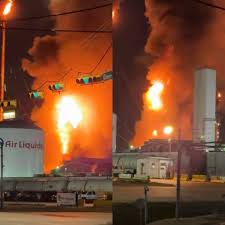
And on March 13, a massive explosion occurred in an oil tank at the BP refinery in La Porte (Texas, U.S.). Yet another great contribution to public health, the atmosphere, the environment, and the climate crisis. Ironically, due to its location on the coast and in the southern U.S., this refinery is also tasked with refining crude oil imported from Venezuela.
Pipelines and extraction to develop Africa
The other news that reaffirmed this fossil-fuel consolidation for us was learning about the current construction of a new pipeline in Africa: Total’s East Africa Crude Oil Pipeline (EACOP), which runs from Uganda to the Indian Ocean coast of Tanzania (1,400 km). The goal was to complete it by October, but it has already faced delays8 due to budget overruns (over $1.2 billion!), and now I suppose the conflict in Iran and neighboring countries will also deal a serious blow to those deadlines. This project is also generating significant controversy due to land acquisition, the environmental risks it entails, and climate considerations.
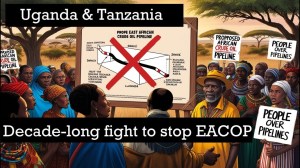
But as if that weren’t enough, it’s not the only project: the fossil fuel industry has focused on Africa and plans to extract reserves at all costs (more about African gas industry here). Many of these deposits are in areas that are difficult to access for both extraction and transportation, and are also in areas of high environmental and social sensitivity. Extraction in Uganda is taking place within Lake Albert (Hoima) and in protected areas.9 All of this confirms the predictions that, as we approach peak oil (and gas), more radical, dangerous, and expensive methods are being chosen. The reCRUDEscence.
In many cases, this is why such projects are being pushed now—because they had previously been dismissed, as often happens. In the case of the Cabo Delgado gas project (Mozambique)10 of TotalEnergies, security concerns led the United Kingdom and the Netherlands to withdraw. The Nador plant is also at a standstill. To those gas projects we have to add the Train 7 expansion in Nigeria.
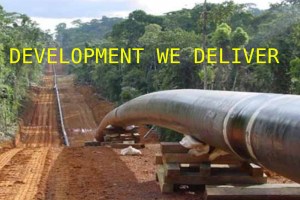
For example, the crude oil that the EACOP11 will transport will (ALSO) be very heavy crude, which requires more refining but also pollutes more and has a greater impact on global warming. The pipeline itself includes systems to heat the crude so it can be transported. That’s how heavy it is. It will be the largest of its kind in the world.
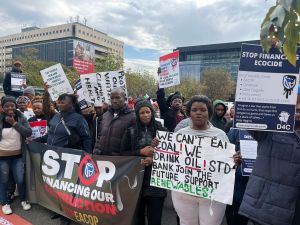
In 2024, another pipeline was completed—the 1,950-km Niger-Benin pipeline—and the Angola-Zambia Pipeline is also in the planning stages. The most ambitious gas pipeline runs from Nigeria to Morocco,12 with the aim of transporting gas to Europe. Although it is at a very advanced stage, it is currently at a standstill.
In addition, oil production has increased in Namibia with the Venus offshore oil field, and in Libya, where—15 years after the conflict—11 onshore and 11 offshore blocks were put out to tender in 2025. In Namibia, the beneficiary is TotalEnergies, in an environmentally sensitive area such as Namibia’s Orange Basin. In Libya, it’s the usual suspects: Chevron, Eni, QatarEnergy, Repsol and TPAO. Additionally, new refineries are planned in Uganda and Dangote’s mega-refinery (with a capacity of 650,000 barrels) in Nigeria.
In the case of Africa, it should be added that all these projects, all this new extraction, and all that new oil and gas to be burned and converted into greenhouse gases, are justified by Africa’s economic situation and as a way to overcome its economic crisis. However, indebted oil-producing countries can attest to a different reality. This is also true in Africa (Nigeria or Angola). This is what is known as the resource curse, a process by which economies possessing resources such as oil or gas, instead of becoming wealthy, end up further indebted. And the most illustrative example: Venezuela. And as is the case, these resources lead to a focus on their extraction, or to a relaxation of regulations, etc., in order to address the debt incurred.
Furthermore, it is striking that both oil and gas pipelines terminate at the coast, and that it is there where these gasification plants and refineries are built. The objective is clear, as they serve the export ambitions of both China and Europe. Therefore, we can conclude that colonialism continues on the African continent, now to alleviate energy dependence affected by peak oil/gas and other circumstances (the war in Ukraine, to which we must now add Trump’s tariffs, the attack on Iran and its repercussions in the Gulf countries, etc.).
The Urgency of Abandoning Fossil Fuels
If the current situation demonstrates anything, it is that our dependence on fossil fuels is far too great. It also shows that fossil fuel dependence equals “war” (No more blood for oil!). The climate crisis is a consequence of fossil fuel dependence, but there are even more reasons why we need to overcome it: ecological debt, war, colonialism, etc.
But this situation also shows us that the so-called Energy Transition (Ecological Transition) has not been—and is not currently—what it claims to be: a great deal of electricity is being produced to power both conventional demand and the new demand from transportation. Yet the same amount of fossil fuels continues to be consumed, both for transportation and to generate electricity and heat (mostly gas). What experts argue is that instead of replacing fossil fuels, renewable energy production is being added to the mix.
The history of the Climate Summits is a history of disappointment. A year-after-year march toward undesirable scenarios with little or no progress. Yet, even if minimal, some measures are being taken. The recent COP 30 suffered from the same shortcomings as its predecessors. No roadmap was agreed upon to phase out fossil fuels, but at least there were some glimmers of hope along that path: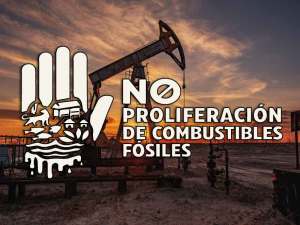
Eighty countries (including oil-producing nations such as Guyana—you can also ask them about the resource curse—Trinidad and Tobago, and Mexico) supported the need for a process to phase out the use of fossil fuels. A proposal was also made to prevent oil drilling in forests and jungles. But above all, it was the Fossil Fuel Non-Proliferation Treaty Initiative that used COP30 to, at the very least, continue advancing its proposal.
This initiative emerged in 2019 as a result of previous proposals. Eighteen states, mostly island nations (Vanuatu, Tuvalu, Fiji, Tonga, the Solomon Islands, Niue, East Timor, Antigua and Barbuda, Palau, and Samoa), and Colombia are already participating in it. It also includes 193 cities and subnational governments (including those of Hawaii and California in the U.S.), 4,211 organizations, and is backed by 2,185 scientists and researchers and 100 Nobel laureates.
It is clear that the situation requires leadership, and that this leadership, despite the urgency, must be built gradually. As a result, they proposed at the COP the holding of an international conference to take place from April 24 to 29, 2026, in Santa Marta, Colombia. Many other countries will participate in it.
Day after day, especially since the start of this year 2026, those who rule the world show us the opposite, but let us hope that the efforts of those who suffer the consequences, of those who do not shirk responsibility and who do not turn a blind eye to the obvious despite economic interests or a seat on a board of directors, bring the truth to light and set a new course.
Let us hope that the current situation has at least served to alarm us about the consequences of continuing to depend on fossil fuels.
Let us hope that this conference sheds some light on the cloud of this reCRUDEscence. We urgently need it.
EPILOGUE
And after all this—acid rain, toluene and benzene, spills into lakes and rivers, the climate crisis, pollution of the very air we breathe, so much death and horror, the displacement of thousands of people, etc, etc—we will wonder if the minutes we saved by burning that gasoline were worth it to lead the Planet to this catastrophe.
NOTES:
2 Ibid
3 Ibid
6Sulfur dioxide and nitrogen dioxide, PM2.5, and carcinogenic compounds called polycyclic aromatic hydrocarbons (PAHs), likely heavy metals and inorganic compounds from construction materials and other debris from burned buildings and infrastructure.
7https://osalde.org/comunicado-de-osalde-sobre-el-escape-de-compuestos-organicos-volatiles-benceno-tolueno-y-xileno-de-petronor-sobre-la-poblacion-de-muskiz
8https://constructionreviewonline.com/controversial-east-african-crude-oil-pipeline-eacop-costs-balloon-to-5-6-billion
9 Protected areas of Kabwoya, Bugungu, Murchison Falls, the Semliki Valley, and Lakes Edward and George
10Funding shortfall: $2.2 billion
Capacity: 13 million tons of liquefied natural gas per year.
11Budget: $5.1 billion. Increased by more than $1.2 billion.
Capacity: 216,000 barrels
12Budget: $25 billion. Length: 5,600 km
13 Major project to be listed on both the Nigerian and London stock exchanges.
