
Martín Mantxo Uriz (Agrarian Technical Engineer)(*)
(EUSKARA) (CASTELLANO)
In 1985, due to a small debt owed to Tolosa, the need arose to create a research programme on the Tolosa bean.
The research work carried out on the characterisation and selection of the Tolosa bean began at the Agricultural Research and Improvement Service (SIMA) in Derio (Bizkaia). The study had to typify a population of Tolosa beans (known in Bizkaia as Gernika bean) selected on the basis of their origin, as well as seeking maximum quality, maintaining the legume’s total health and achieving adequate commercial productivity.
In short, the aim was to make a selection to provide the farmer with top quality seeds.
The Regional Agricultural Office (OCA), the Agricultural Research and Improvement Service (SIMA) of Derio (Bizkaia), the Basque Government and the Provincial Council of Gipuzkoa were responsible for making the project a reality.
A HUNDRED SAMPLES
Between 1985 and 1986, the Agricultural Services of the three Basque Provincial Councils collaborated in a project to prospect for different cultures of the Tolosa bean throughout the country. They collected 105 different samples that were being cultivated in the Basque Country.
The plantation was located in Ibarra in the Montes farmhouse and after harvesting and subsequent drying of the pods, the descendants were selected from all of them, identified and numbered, up to one hundred pods of each type.
The total obtained from each type is numbered, weighed, valued and the colour and curvature of the pods, their length and width, the relief of the bean, health, etc. are noted. With regard to the type of beans, the type (elongated, rounded, elliptical, etc.), colour, weight, length and width, etc. are assessed.
After the assessment, around 400 lines of different plant material were obtained. Of these, 100 were chosen, as they were considered the best (in different aspects). The rest of the material is kept at SIMA for possible future use.
During these years, and specifically from 1986 to 1989 at the SIMA in Derio (Bizkaia), the agricultural engineer, Tere Sotil Gorriti, carried out her end-of-degree project, ‘Identification and characterisation of the Tolosa bean’, for two full years. Izaskun Jaio then carried out the work on ‘Selection of the Tolosa bean’, as a doctoral thesis at the University of the Basque Country.
A RETURN TO ANALYSIS IN THE 1990S
In the 1990s, bean cultivation in the Basque Autonomous Community (BAC) continued on small farms. Despite market demand and high prices for the product, this traditional crop had not increased the area sown.
This lack of cultivation was due to existing health problems (viruses, bacterial and fungal diseases), lack of selected plant material and inadequate cultivation techniques (such as intercropping with maize), which resulted in low profitability despite the high market prices obtained.
For this reason, from 1994 to 1996, a project was started to optimise and improve bean cultivation in the BAC, the main objective of which was to promote sowing throughout the country. The analysis work focused on the Tolosana, Gernikesa and Pinta Alavesa types of bean. The previous study of the Tolosana type, mentioned above, made it possible to start from lines that had already been characterised.
Among the organisations and bodies that supported and worked on the project were the Department of Industry, Agriculture and Fisheries of the Basque Government, the Horticulture Section of the Provincial Council of Bizkaia, the Provincial Council of Gipuzkoa Centre for Agricultural Research and Improvement (CIMA), the Agricultural Research and Improvement Service (SIMA), the Plant Health Unit of Gipuzkoa, the Regional Agricultural Office (OCA) of Tolosa and the Exp. Zubieta (Provincial Council of Gipuzkoa).
STUDY AND IMPROVEMENT
The characterisation, selection and improvement of the high-quality bean variety were the objectives of the study. For this reason, they were divided into the following parts:
1. Characterisation and improvement of the plant material.
2. Control and monitoring of the main fungal and viral diseases of the crop.
3. Organoleptic quality analysis of the different varieties evaluated.
THREE YEARS OF RESEARCH
In 1994, sowing began in the field with isolated plants from 10 characterised lines of Alubia de Tolosa. The best 150 plants were then identified and marked for cycle characteristics (earliness), plant goodness and health. They were also selected at harvest, with an index of between 5-10%, for seed appearance, size homogeneity and production components. Lastly, a test for foot rot (parasitic fungal complex) was carried out on a plot which had been heavily attacked in the previous season.
The following year, the individual plants of the five Tolosan bean lines selected in 1994 were sown as ‘plot plants’. The families were again selected for cycle characters, uniformity and yield components. Analysis of quality parameters of the original Tolosan bean lines and monitoring of the main fungal diseases and viruses in the evolution trials were also carried out.
Comparative trials with the lines selected the previous year in the Albistur, Aia, Rigoitia and Zestoa family lines in Tolosa were the first work carried out in 1995.
Subsequent analyses led to more parallel demonstration trials of multiplication on the farmer’s farm, with the same plant material, in order to find out how well they adapted and thus obtain a first multiplication. They did not forget to select the lines for seed appearance, size homogeneity and yield components. Also in the last year, a monitoring and identification of fungal diseases and an analysis of plants with symptoms of virosis were carried out.
WORKING METHOD
In the 1994 selection programme, 10 lines of Tolosa beans were used with 684 plants per line in Asteasu, Tolosa, Albistur, Aia, Zestoa, Elduaien, Errigoiti, Hernialde, Hernani and Donostia. It was trellised as a single crop. The trials were carried out at the Zubieta farm in Hondarribia and at the CIMA in Arkaute (Araba). Characters such as flowering, ripening, pods per plant, seeds per plant, seeds per pod, weight of 100 seeds and production per plant were evaluated. The standing disease trial of the same year was carried out in the Maletxe farmhouse in Hernialde, with a split-plot design and 4 replications. The factors were as follows: smooth soil vs. ridged soil, – direct sowing vs. taco sowing – with fungicide vs. without fungicide. The Tolosana variety was used for this analysis, as it is the most susceptible to the disease, together with other ridge varieties.
In 1995, the Albistur, Aia, Zestoa, Rigoitia and Hernani lines were evaluated, with an average number of 30 families per line. The Tolosana bean varieties were sown as a single crop with net trellising in 10 m plots with 40 taps at 25 cm distance from each other.
The characters computed this year were again flowering, ripening, development (visual estimation) and plot yield, as well as yield components. The selection rate of the Tolosana families was around 10%.
In 1996, 9 lines of the following families were evaluated in the Tolosana mode: 3 from Albistur and 2 from Aia, Zestoa and Rigoitia. The comparative trials were carried out at Finca Zubieta and at CIMA. The experimental design used in all cases consisted of randomised complete blocks with 3 or 4 replicates, depending on the availability of seed. The Tolosana lines were sown as a single crop with net trellising in 18 m2 plots at 1.20 m between rows and 12 cm spacing.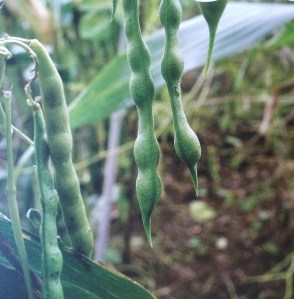
In the Tolosana selection trial, maturity, health and yield per plot were taken. Quality analysis of the Tolosa bean was carried out at the Valladolid Agricultural Research Service and the following parameters were determined: moisture, weight of 100 seeds, seed skin, water absorption, tenderometric grade, optimum cooking time, seed heterogeneity, protein, fat, acid detergent fibre, neutral detergent fibre, sucrose, raffinose and stachyose.
The detection of common mosaic virus in field trials was carried out by the ELISA technique (immunoassay technique).
1994
The Tolosa bean trial was carried out in Hondarribia (Gipuzkoa) on 10 previously characterised lines, with 684 plants from which it was intended to select a total of 4 or 5 lines. The number of plants per line selected ranged between 24 and 56. Hernani, Zestoa, Donostia and Asteasu stood out in terms of production, obtaining a higher number of seeds with a higher seed weight than the rest of the lines. No major differences were observed for the characteristic number of seeds per pod.
In addition to the production values, other parameters influenced the elimination of 5 lines. In this example, Hernani was included as it showed good production but the grain size was estimated to be too large. Asteasu was also excluded as it had a good yield but serious problems with seed shattering in periods of water shortage.
On the basis of these results, together with preliminary sensory analysis, five lines showing the best adaptation and idiotype characteristics of Tolosana beans were selected for 1995. These included Albistur, Zestoa, Rigoitia, Donostia and Aia.
Health problems
At the beginning of this work, we were faced with a major problem, the ‘foot rot’ disease, which causes the death of the plants. Due to this disease, many growers who have suffered from it have finally decided to stop growing beans.
For a long time it was believed to be a virus disease, which killed the plants and was also attributed to ‘soil fatigue’. It was a disease that could not be combated unless strict crop alternatives were followed. This meant leaving the land uncultivated for several years without being able to be sure exactly how many years.
For a long time, this problem had conditioned the cultivation of this legume in the Basque Country. The research we carried out with Francisco J. Checos and Dioni Berra provided us with many explanations for this problem and today we can be sure that it has been solved.
Along the same lines, around 1985, another bean health problem was detected, the bean weevil, a real headache for producers and researchers in our country. Freezing the beans for only one day solved this problem. However, many studies and trials were carried out over many years to eliminate the bean weevil.
1995
The number of initial lines evaluated in 1994 was 10, but was reduced to 5 in this year’s family selection. Therefore, in 1995, the 30 best families of the 5 selected lines were planted. Vegetative data were taken on plant and yield components. A total of nine families belonging to the Albistur, Aia, Zestoa and Rigoitia lines were selected on the basis of the characters measured, as well as visual estimates of grain (shape and size).
Quality analysis
It can be seen that there is great variability in the percentage of skin of the Tolosana bean lines. Water absorption is around 95%. Elduaien and Albistur showed lower values for this parameter.
The cooking time ranged between 55 and 70 minutes.
The greatest grain heterogeneity in terms of hardness was found in the Errigoiti and Hernialde lines.
As for the chemical quality indicators, small variations in protein and fat content were observed in the samples analysed. As for digestibility, measured by FAD (Detergent Acid Fibre) and FND (Detergent Neutral Fibre), the Tolosa and Donostia lines had the highest values. As regards sugar content, there were slight variations between lines, but these were not significant. It is necessary to carry out more quality controls with the selected families and compare them with the original lines, so that more definitive conclusions can be drawn.
1996
During this third year of study, a total of 9 lines chosen in 1995 and belonging to 4 different families were tested.
It should be noted that in this season, due to the rainfall during the growing season, a severe attack of anthracnose (Coletotrichum sp.) and a slight attack of grease (Pseudomonas syringae pv. phaseolica) and common mosaic virus (BCMV) were detected, although the latter disease was severe in some stands. Another noteworthy feature was the low overall fruit set up to 1.50 m plant height.
On the basis of the yields obtained, as well as the shape and size of the grain, and based on the growers’ criteria, the following Tolosana lines were selected: Zestoa-1 (line 301) and Albistur-1 (line 143). These lines went on to the basic seed production phase to be transferred to the Tolosa Bean Producers’ Association.
Final conclusions
IN THE THREE YEARS OF TOLOSA BEAN SELECTION, LINES 301 AND 143 WERE OBTAINED AND MULTIPLIED FOR THE PRODUCTION OF BASIC SEED AND THEIR SUBSEQUENT TRANSFER TO THE ASSOCIATION OF TOLOSA BEAN PRODUCERS.
In the monitoring of the ‘foot rot’ disease, it was confirmed that the Tolosana bean carries the dominant allele of gene I which confers immunity to BCMV, but induces a hypersensitive reaction, in many cases attributable to the mycosis mentioned above.
Physical and chemical quality analyses of the original Tolosana lines showed some variability and they stood out among a group of Spanish varieties in parameters such as skin percentage, water absorption and fast cooking.

Organoleptic analysis of the Tolosa bean at the Frontón Restaurant
by María Morales (Journalist)
AS PART OF THE STUDIES FOR THE IMPROVEMENT AND SELECTION OF THE TOLOSA BEAN, AN ORGANOLEPTIC ANALYSIS OF THIS LEGUME WAS CARRIED OUT IN ADDITION TO THE FIELD WORK IN ORDER TO COMPARE, ONCE COOKED, THE RESULTS IT WAS OFFERING IN OTHER ASPECTS.
This analysis was carried out during three campaigns between 1994-1996 and the place chosen was the Frontón de Tolosa restaurant.
Once a week, 8 or 9 different beans were cooked. Varieties studied in the project for the Optimisation and Improvement of Bean Cultivation in the Basque Autonomous Community were chosen for this purpose. Some foreign varieties were also cooked, especially from Castilla-León or Navarre, in order to compare them with other similar legumes.
When they were prepared, they were cooked in a very methodical and rigorous manner. The same pots were used, as well as the same amount of water, salt and oil. The manager and chef of the Frontón restaurant, Roberto Ruiz, was in charge of cooking them and Martín Mantxo noted down the technical aspects, such as when each one began to boil, the absorption of water, the cream they produced, etc….
After cooking and collecting data on them, a panel of judges made up of members of the Producers’ Association or close to it carried out the organoleptic tasting, i.e. analysis of the flavour, textures and smells of the beans, among other characteristics.
Both the cooking and the tasting were carried out according to a very strict evaluation system in order to ensure the utmost seriousness.
Once all the necessary analyses and tastings had been completed, two bean varieties were finally selected, which are currently grown by the producers of this legume. For this final selection, not only the excellence of the beans in the gastronomic tastings was taken into account, but also the high productivity in the harvest. Therefore, although other varieties had a high organoleptic quality, they were discarded because of their low fertility.
Thanks to these tastings and the technical work of selecting the black bean, experiments were carried out on a culinary aspect that had not been studied until then and which needed to be filled.

Morphological characteristics of the Tolosa bean (Eusko Label of ‘quality’)
by Eusko Label
Morphological characteristics of the Tolosa bean;
– «Tolosana» (Aiena) variety registered at the National Institute of Seeds and Nursery Plants.
– Indeterminate growth habit (tall bush).
– Production system associated with maize, net, pole or rod and with a duration of cultivation in the open air from sowing, which extends between 120
– Grain ovoid in shape and ranging in colour from dark purple to almost black.
– Size between 1 cm and 1,5 cm in length and the weight of 100 seeds is between 50 and 65 gr.
Minimum quality and freshness characteristics;
– They must be whole and firm.
– Healthy and, in particular, free of mould, rot, insects and parasites.
– Fresh and characteristic of the varietal type.
– Free of abnormal external moisture and foreign smell and/or taste.
– Clean, practically free of damage and visible foreign matter.
Packaging and labelling requirements;
– The product may only be marketed in 1 kg, 3 kg and 25 kg packages if intended for the catering trade and in 700 g glass jars in the case of pre-cooked products (any of these forms of presentation must bear a numbered control label on the packaging, bearing the Eusko Label symbol, awarded by the Kalitatea Foundation, the body which controls and certifies the quality and origin of this product).
– The contents of each package must be uniform in terms of varietyof caliber, size, colouring and degree of ripeness. The package must be sealed in such a way as to be tamper-proof.
– The package must ensure that the produce is easily visible, and that it is adequately protected and preserved.
– The information that must appear on the labelling is: the name of the bean, net content, date of packaging, date of minimum durability, packaging batch, commercial category and numbered Eusko Label control label.
Cultivation
Tolosa Bean‘ Producers’ Association
Soil preparation
This begins with deep ploughing with a mouldboard to incorporate the manure. The soil is worked to a depth of about 20 cm. The penetration of the plough is varied each year to prevent the formation of hardened layers. This work is carried out from October to December, and if the plot is occupied by a winter crop, it is carried out in the spring.
In spring, two passes are made with the rotavator to loosen the soil. With the first pass, the mineral fertilisers (if any) are buried and with the second pass the soil is prepared for immediate sowing.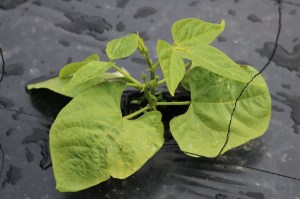
Sowing
Sowing is started at the end of the second week of May, once the risk of frost has been eliminated.
The sowing date can be delayed but must be completed by mid-June in order not to delay harvesting. Manual and precision seeding are the main methods of sowing.
Weeding and hoeing
These tasks are usually carried out manually and during the early stages of cultivation.
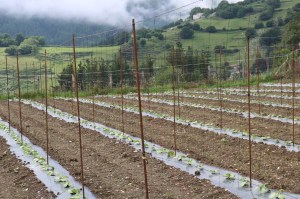
Placement of stakes
The stakes will support and guide the plant during its development and are placed once the first trifoliate leaves emerge in the crop.
The trellising systems and materials used for this purpose have evolved in recent years, so each grower uses the one that best suits his needs.
- Trellising with CORN. The most widely used and traditional system in Gipuzkoa.
- Vine training with MESH.
- Linear training with LINEAR ROD.
- Camper-shaped training with rods.
Harvesting
Harvesting is carried out by hand and is staggered as the pods ripen and after the beans have reached an optimum state of ripeness.
This careful harvesting system guarantees the supreme quality that characterises the Tolosa bean.

Drying
Once harvested, the pods are spread out in the ganbaras (attics) of the farmhouses until the beans reach a humidity of 14% (in any case a place covered from the rain).
Shelling, sorting, cold treatment against weevils and packaging
For all these tasks, the association’s workers use the plant in Tolosa. After shelling and treatment against weevils, it is sorted and finally packaged.

(*) INTRODUCTION:
This text is one of those written by Martin Mantxo Uritz in his extensive research and selection work on the Tolosa bean. Because of the time when he carried out his research, none of his texts are available on the Internet. We consider it to be of great importance, because of its objective of selecting, improving and establishing the identification parameters of the Tolosa bean, and even more so, because we understand that this work has not been continued. That is why we wanted to recover it and upload it, to make it accessible.
This one, published in the book ‘Pul pul pul – Alubia de Tolosa’, cannot be found on the Internet either, so we have transcribed it. And as it cannot be found in Basque either, we have translated it. We have also translated it into English, as we believe it may be of more interest than just locals.
The book is a compilation of articles by different authors. We include other articles attributed to María Morales as part of the same process, and two others of a technical nature by Quality Eusko Label and the Association of Tolosan Bean Producers (the latter two appear as chapters under those heading, but it is understood that they are also the authors of the texts). The book appears to be a self-production although Caja Laboral, the Tolosa Town Council and Frigicoll appear in the book, it is understood that they are the financial backers.
We also use the photographs in the book, though we have not had direct access to them. These are attributed to Nestor Ardanaz and others, without specifying which is which.
