
(Euskara) (Português) (Castellano)
PDF (Spanish)  / Rebelión
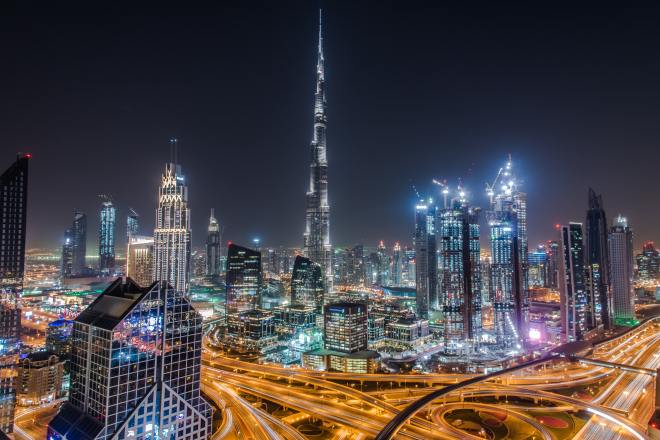
At the last World Climate Summit COP 28 in Dubai (United Arab Emirates – UAE), one fact was the focus of criticism and the incompatibility of the organisers with a proposal that met the needs of the current climate crisis: the fact that, in addition to being a country totally economically dependent on fossil fuels, the person appointed as president of the COP was the CEO of the National Oil Company, ADNOC. But other aspects received less attention, such as the fact that the UAE and the other oil-producing states of the Arabian Peninsula are totally devoted on megalomania and growth. No doubt these aspects are also closely related to oil and the benefits they receive from it. But for that very reason, because they are what ultimately promote its excessive consumption, they need more attention. Undoubtedly, the fact of appointing the CEO of the 12th largest oil company in the world is reprehensible, but it is even more reprehensible that he is a sultan of an emirate that only seeks to have the biggest skyscrapers and the biggest skyline in the world, with what that means in terms of energy and economics in order to obtain all the millions that are needed to do so. And indirectly with what that means in terms of climate for the Planet.
«Calling the system «civilization»,
While high up loom tall buildings,
While slender primeval trees once stood,
Bird songs filling the air instead of policemen’s whistles«.
(Mercedes de Acosta, «Song of fifth Avenue»)1
«Level by level it had risen, a marvel for all to see. The great cranes hoisted the steel into position and held it while the bedlam clamour of the rivet guns gave proof that it was being secured; then, their work at one level completed, the cranes, like sentinent monsters, hoisted each other to new positions, to repeat the process. As the structure grew, its arteries, veins, nerves and muscles were woven into the whole; miles of wiring, piping, utility ducting; cables and conduits; heating, ventilating and air-conditioning ducts, intakes, and outlets – and always, always the monitoring systems and devices to oversee and controlthe building’s internal environment, its health, its life«.(Richard Martin Stern. The Tower. 1974)2
«The speed, the dizzying pace at which buildings, skyscrapers, neighbourhoods and cities can be erected today is astonishing. Although on a grand scale, it is still the same technique as the LEGO construction sets: a fast and efficient assembly, some cranes, a few people.»
(Ryszard Kapuściński. Lapidarium IV. Anagrama, 2003. Pag 28)
Robert Graves says that «unfortunately fundamentalism, that is, the literal acceptance of myths and metaphors used throughout the Bible, is a disease common to Christianity».3 Indeed, so we have the creationists and so many sects. Although, as he rightly says, this is a widespread practice in Christianity in general, and in other mass religions.
It should also be borne in mind that many of these myths come from oral cultures, and in their transmission they are subject to variations, but above all they are modified once they are written down, sometimes changing their meaning.
One of such myths is that of the Tower of Babel. Because it is a myth. Even if there are many archaeologists trying to find what remains of that attempt at macro-construction. According to many, the aim of this myth is to explain the diversity of languages3*, a phenomenon that has always captivated people: that human beings have been able to develop such range of languages and that with them we manage to understand each other, and, at the same time, not understand at all other people who speak in another language. This is undoubtedly fascinating.
But multilingualism is not and has not been such a problem as to cause the collapse or abandonment of big schale human projects such as this tower. However, multilingualism entails risks, such as one language becoming hegemonic, or wanting to become hegemonic and displacing others. But this is not a problem of the languages themselves, but a question of power. In medieval Iruñea (Pamplona), the language of the common people was Basque, but Latin (church), Occitan and Navarrese Romance languages derived from that Latin, and Hebrew (both the one used in ritual and the Hebrew-Chromance aljamía)4 were also spoken. In the Palestine of Christ’s time, Arabic was not yet spoken, but Aramaic, Greek, Latin (Roman and administrative), and by then Hebrew had already been reduced to a religious language. There are many examples4* .
«For all of our languages we can’t communicate»
(«Natives», writen by Paul Doran, sang by Christy Moore)
But as Genesis tells it, it seems rather that the problem of the tower of Babel corresponded to a desire of God to disperse humans rather than have them concentrate where the tower was erected. We understand that such a macro-project would have attracted many people to work there, or to a concentration of slaves, because we know that the Babylonians and Egyptians also enslaved other people. To do this, God presumably used different languages to create confusion?
In any case, as in many other cases in the Bible, we have here again an image of God as the decider of human destination. And likewise, because of this identification of the Christian God with the male gender, this case also represents a new patriarchal re-assertion.
But for myths, as for parables, different interpretations are possible. I understand this myth more as the explanation of human failure in the face of the excessive desire to grow, the desire for grandiosity, which is nothing more than vanity and greed. On the one hand it makes no sense, because efforts and resources are used without a funded and genuine interest. And on the other hand it has no end, because we will always seek to surpass that level. This also leads to the excessive use of resources and thus to the possible collapse due to lack of material, which could also be a reason for Babel. Both the excessive use of natural resources and of humans (slaves) may be another possible cause: because we already know that it is not in our DNA to be slaves to anyone and at some point we (they) rebel. As we know, then, in that rebellious phase, speaking different languages will not be an obstacle. That rebellion will bring the end of the project, because those useless slave overseers will not be able to move a brick.
Growth. Consumerism. Megalomania.
«It’s only,» Shannon said smiling to himself, «that you are against kings and queens and such, and I glory in them. Think how it would be like if there were only little gray people, no giants to dream and to do so, no great tales to remember, no grand buildings like this one that even shut out the sun. What about that, Frank?»
(Richard Martin Stern. Skyscraper) P 22
An allegory of this tower of Babel can be found today in the United Arab Emirates (UAE). This desire for greatness. To emulate the great, to surpass them.
As we know, the last World Climate Summit, COP 28, was held in Dubai, United Arab Emirates (UAE). Since its candidacy was proposed, the climate movement criticised its nomination because the UAE is a power in oil and gas production, highly economically dependent on this resource. UAE has built all its splendour and luxury from these fuels, from the money that comes from them (we add: «and from slavery»). It was shameful that Sultan Ahmed Al-Jaber, who is himself CEO of the UAE’s Abu Dhabi National Oil Company (ADNOC), the world’s 12th largest oil company, was appointed as COP president. What interests he would defend were clear, when it comes to overcoming the world’s fossil fuel dependence. (See more in “COP 28 fiasco…”)
The results of the summit are now also being judged on the basis of this fact, the extractivist and oil-producing nature of the UAE, and its refusal to consider abandoning fossil fuels. While this is true, in this equation we are missing another fundamental aspect to understand the predestined failure of this (or other) COPs: the megalomania of the UAE (and others), the devotion to majesty. Megalomania in its eagerness to produce or own the most valued properties, spares no resources or energy. Its wastefulness goes hand in hand with consumerism, the consumption of resources and energy not for the purpose of satisfying basic needs, but for one’s own craving to consume.
It is also close to another concept on which capitalism is based, that of growth. Both are based on the idea that what is important is growth: growth in GDP, in sales, in the market, in tons extracted, and megalomania in the number of metres of buildings constructed, in their sumptuousness, in their quantity, etc. Both have rankings to overcome, rankings of MORE. Competition is the basic principle of capitalism, opposed to the human essence of collaboration and mutual aid.
«In a place in the countryside, in a wasteland more than fifty kilometres from New York, rises a colossus of construction: the Roosevelt Mall. Tall, long, bright buildings, dozens of shops and bars, an ocean of products of all kinds. The malls, the gigantic, illuminated, multicoloured cathedrals of American consumerism. At weekends, they are filled with crowds of people who come to satisfy their desires, needs and hopes. They come to look, to buy, to consume; to be».
(Ryszard Kapuściński. Lapidarium IV. Anagrama, 2003. Page 31).
Therefore, it is fine to say that maintaining the consumption of fossil fuels is a problem, but above all it is necessary to ask what for. Because there are many things that all these governments and rulers take for granted, as basic, as unavoidable. Because while continuing to consume fossil fuels is madness with undeniable consequences, the «what for» is even more so. To continue consuming fossil fuels to maintain the desire for grandeur, to surpass one’s neighbour, to be the one with the most skyscrapers, the tallest skyscrapers?

Because I suppose it’s clear that the construction of all those towers also involves a lot of energy consumption: to extract aggregates and lime and iron and sand for the glass, and all the materials that may be needed, as well as the energy to grind rock, to bake cement, to turn sand into glass, for transport, for construction; as well as the huge amounts of money that come from the sale of fossil fuels.
In the case of the UAE, its electricity system is based on production from gas-fired thermal power plants, of which it has large resources (13,021 MW of capacity) and nuclear (5,600 MW of capacity) (total: 18,621 MW), while solar, of which it also has many resources, accounts for 4,277 MW5. This being said, more than in any other case, it is pertinent to ask the question «energy for what?” Because replacing fossil energy with renewable energy and maintaining the desire to continue building more and more skyscrapers would mean an insane number of km² of installations. The same criticism we make in other places: the first thing would be to consider the «what for» and then lower consumption levels.
It is clear that less can be consumed: two centuries ago, no fossil fuels were consumed at all. While it can be argued that this has improved the quality of life (as we are constantly told), we would have to see which are the things that have been improved and which are of real benefit, and eliminate the rest (or not promote them, etc.). Or we can check what was improved and what was made worse, because many unwanted consequences are there too. And above all because, if we are perceptive, we will realise that most of its use is to maintain a system entangled in its own consumption.
Mankind has spent its time demonstrating its intelligence, its ability to master nature, to overcome constraints by creating amazing elements, in many cases to impress God, to show its devotion. But mostly to show that they are more modern than their predecessors, more skilled, more resourceful, wealthier than. We can understand all of this as a way of encouraging self-improvement and, thus, being more capable; or we can even admire the beauty of cathedrals, the majesty of a skyscraper. But how many do we need? Or do we really need them? More to the point, are we admiring them?
But none of this is raised in meetings such as the COP.
Will the towers in Dubai also collapse?
«Buildings were not designed as aircraft or space vehicles were, right down to the ultimate tolerances of their materials. Rather, because weight was not the basic problem, there was a safety factor calculated with every structural member, every cable, every wiring specification. Programmed right into the design calculations were remote contingencies such as winds of 150 miles an hour, far in excess of anything the city had ever known, or massibe surges of electrical power almost impossible to conceive. Because of the Tower’s height, lightning strikes were accepted as normal; the mammoth steel skeleton would carry the charge harmlessly into the ground, as it had already done often enough during construction«.
(Richard Martin Stern. Skyscrapers.) P41
The skyscrapers and mega-hotels of the UAE are well known, as are many other extravagances such as artificial rivers and artificial oases in the middle of the desert. In recent years the UAE has become the Las Vegas of the East, a benchmark for luxury tourism, with 16 million tourists a year. All built with oil money. And with a lot of fossil fuel, with a lot of cheap energy. And with cheap eslave energy too.
HOWEVER, such megalomania will lead to collapse. Perhaps sooner elsewhere than in the UAE, because, as in other rich countries, UAE will still maintain economic power to carry on for a while. As they already do today, while all around them collapse is a reality: rising temperatures mean more drought across the Sahel-Saharan strip, which in the poorest economies, translates into famine. In the Horn of Africa 50 million people are affected by the food crisis and thousands will die as a result. Meanwhile the UAE continues to defend the use of fossil fuels, using its money to desalinate water. But not only…
And on a global scale, this model, it is known, will bring about the collapse of our Planet, therefore, soon, not only will the skyscrapers collapse, but the very city that maintains them will collapse, nobody will be able to go there, and being empty and without maintenance they will end up… I leave this to other minds to imagine the scenario, but, as we are confirming as time (and COPs!) goes on , the dystopia will become reality.
Not far from the UAE, further north in the Persian Gulf, the first civilisation in history flourished in that area: Sumer. Perhaps we could learn from its history. Although today everything is much more intertwined and the UAE is situated in a globalised capitalism, the moral is clear. Sumer collapsed because of the abuse of the land and ecosystems through agriculture and the dependence of an entire civilisation that had developed many social sectors to feed6. This agriculture led to deforestation (coupled with that which occurred further north where the Euphrates and Tigris originated), and this in turn led to the salinisation of water which rendered much of the land unproductive7. Historians tell us that today’s desert landscape has little to do with the original one, but is related to human activity. And it goes back many millennia.
It’s not just a skyscraper, it’s a skyline.
The UAE is a paradigm of the most aggressive, wasteful and megalomaniacal capitalism. All this is helped by all the oil and gas money, of course. And a rather disrespectful and classist mentality, not alien to any other capitalist state.
The separation of the different territories by the metropoly to control the oil meant concentrating the wealth in a few small states: UAE, Qatar and Kuwait. This now means that everyone is bathing in petrodollars, each one of them is aiming to show their own highess, and nothing better for it that a skyline.
Skyline actually means «horizon», but nowadays has become synonym for a line of skyscrapers of a megacity. With this we have, once again, an analogy of the purposes of this supposed civilisation, in which natural phenomena are replaced by something created by human grandeur. Even more, the grandeur of concrete. Thus, the skylines of New York, Ottawa, Rio, Sao Paolo, Hong Kong, Singapore, Sydney… or any of the financial centres stand out today. In Spanish, for instance, «horizon» (horizonte) keeps on having same meaning, and «skyline» has been adopted into the language to mean a skyscraper landscape.
For the UAE, as for other rich countries, it is not enough to build one or two towers. They had to build its skyline of skyscrapers to show its power, to put themselves on a par with other powers, to reach the stature (never better said) of the richest countries, to demonstrate that its wealth is same level as the greatest powers.
The skyscraper became a symbol of grandeur, of the success of capitalism and technology, overcoming the challenges posed by gravity and Nature. Or even God, for in the times when his influence was most visible these goals did not materialise either. The skyscraper became a symbol of power, progress, wealth and splendour.
Because of their appearance, skyscrapers have always been associated with penises8, with a phallus of enormous dimensions9 (it is not in vain that the verb used in English to designate their construction is «to erect»). The skyscraper is thus understood as a projection of machismo in general, and of certain males in particular. The skyscraper is the materialisation of Freud’s idea of «high achievement and the acquisition of wealth as the construction of monuments to our penises»10. Thus, it is not enough to make a name and a fortune; Rockefeller needs to have his skyscraper (or a plaza full of them, Rockefeller Center). Trump his. Saudi prince Alwaleed bin Talal his (Jeddah Tower in Dubai).11
The image of the skyscraper was installed in the imaginary through the big screen, a primordial vehicle for the colonisation of the masses, from films such as the one of the same name (Skyscraper (1928)), which shows its construction, or the mythical photo of the workers having lunch suspended on a beam («Lunch atop a Skyscraper») or all those by Lewis Hine whom coincided with the construction of the iconic Empire State Building. Or the one on whose clock Harold Lloyd hangs. Or the one that dominates everything in Metropolis. Or the one King Kong climbs on. The ones in Bladerunner overflown by ships and flying cars. The one in Pretty Woman. The one in Home Alone II – Lost in New York12. The one in Babel where Chieko Wataya lives in Tokyo (and dies). The obvious one from The Towering Inferno (based on the book «The Tower» by Richard Martin Stern). The Tower of Mordor is a prototype (as we nicknamed the Iberdrola Tower in Bilbao). And no doubt the Twin Towers that were endlessly replicated for us on the day of their destruction.
The EUA achieved independence in 1966 (Qatar in 1971). There were no large buildings. Today, however, the EUA has 134 skyscrapers over 200 metres high, including 18 over 300 metres high. ALL built since 200013. But there are also 37 more in the pipeline. So what are we worried about when this is the model?
Of the 100 largest in AEU 84 are located in Dubai, the great skyline. The rest (16) are in Abu Dhabi. Among them, the Burj Khalifa, which is considered to be the tallest in the world at 828 metres, stands out14. Because we can conclude that all this corresponds to a great competition: companies and owners, cities and governments to have the tallest skyscrapers. And then to have the longest, the tallest skyline. In that respect UAE and Dubai also stand out with the tallest skyline in the Middle East and in the world.
Thus, a country that gained its independence in 1966, from being a country of Bedouins, living in tents, went from 2000 to building 134 skyscrapers. We have to fill them too. Because we will always have the doubt: are skyscrapers planned with respect to the need for housing or do we start from the capitalist premise that first we build (or produce) (there is always a conscious market study!) and then we see how to fill them?
I don’t have many examples nearby. One of them is the tower that Iberdrola built in Bilbo, to, as we say, demonstrate to the world and to the city, its power harvested after years of expansion around the Planet. This one, for example, we know that it was not built with prospects, apart from the aforementioned grandiosity. Iberdrola was initially going to occupy only a part of the 165-metre high building, and the rest aimed to be filled with shops, cafés, etc and 16 floors were intended to be rented, which did not happen for a long time (I don’t know how long ago)15.
«What I’m saying» the governor said, «is that our brand-new shining beautiful World Tower isn’t a sign of progress at all; it’s a sign of retrogression, just another dinosaur stable.»
(Richard Martin Stern. The Tower. P 73)
Some say that skyscrapers are the most sustainable buildings. Obviously: they are perfectly sustained! Or they define themselves as «sustainable» in another twist of hypocrisy, misrepresentation and deceit (like the Iberdrola Tower mentioned above). There is a widespread belief that it is a way of getting the most out of a surface, although it takes an extensive base to sustain all that. Canadian architect and design professor Lloyd Alter disagrees: «studies show that taller buildings are simply less efficient and don’t even provide more usable area». Now, anyway, they need tons of steel, concrete, glass, and above all, energy (human, fossil, etc) which mean big impacts in all their process. But also, tall buildings are more structurally demanding than shorter ones, so they require more steel and concrete.
The Guardian’s architectural expert Rowan Moore argues that «increasing height increases both operational and embodied emissions«.16 But once built, they also require more energy to cool, heat and operate the lifts. According to engineer Tim Snelson (Arup) this is 20% more than in mid-rise buildings. In New York, skyscrapers (buildings over 2,300 m2 in floor area) are responsible for 30% of the city’s carbon emissions.
«It has been deemed acceptable – by the building regulations, by architects, by the professional media – to rip untold tonnes of matter from the earth and to pump similar tonnes of greenhouse gasses into the atmosphere, in order to produce magical architectural devices that might, if all their wizardry were to function as promised, pay back some of their carbon debt some time in the next century. By when it might be too late”. (Rowan Moore, The Guardian)
And I think of all those glass skyscrapers in the Arabian desert. 828 metres high, of glass catching the sun’s rays, with nothing around it, because… it’s the HIGHEST in teh world! Summer temperatures between 38°C and 42°C between April and October, with highs of 48/49°C (or even higher), warns climatestotravel.com.
Haimas or tents (as well as teepees, yurts and others) are constructions that offer shelter and correspond to the needs of these climatic conditions. In addition to being affordable and simple, truly sustainable, they also made it easier to be transported, to move around, to move from place to place when conditions were adverse or resources were scarce, and a better place was needed. The tents were able to provide shade, to provide shade from the sun’s rays, to allow the air to flow during the hot day, and to encapsulate the heat obtained during the cold night. Without forgetting that the human being had an active role in the maintenance or even the creation of ecosystems such as the oases, which were also fundamental for the development of human life. Natural reciprocity.
But those towers? They were not designed for the desert. Or yes, like the skyscrapers of New York: they are designed in an era of energy waste in which it is possible to cover somatic needs, based on the options provided by energy resources and technology (with the usual consequences). What you need in winter is to heat them, and in UAE, to cool them. When there is cheap gas and oil, that is not a problem. Now, another thing is the associated emissions.
Fossil fuels as a currency
«Here the VIP will get out of their cars,» Patrolman Shannon said, «and smile at the little people, and walk like kings and queens to the platform….”
– Where the speeches will be the same,» Barnes said. “They will praise motherhood, the United States of America, and man’s unquenchable spirit. One or two of the pols will slip in a little pitch for votes»
(Richard Martin Stern. Skyscrapers. P 22)
That fossil fuels are money is obvious. Now, if we think that oil is at its peak, at its way downards, and that because of the environmental and climate disaster that its use has caused, we should be more careful about its consumption, this is alarming. It is alarming that oil means money, because it means that its use will be boosted (enhanced) just for the sake of it, to ensure profit, and more profit.
OK: this is not new either. Now: to think that all this use and abuse is for… buying football teams and footballers for millions; building skyscrapers… is tragic. Equally, the fact that we are giving up the Planet and the climate of future generations, and also the energy they could use (more intelligently) but that we are doing it to buy football teams and footballers and build skyscrapers? Please!
And the head of the madhouse, the Sultan and CEO of the world’s 12th largest oil company, is elected to find a solution? Exactly: here we go.
Skyscrapers are therefore, given their dimensions, the greatest symbol of capitalism. The greatest symbol of speculation. But not only that. As Rowan Moore denounces, they are also a symbol of corruption: «In the Gulf States (and indeed in Britain, to the extent that dirty money often goes to tower projects), skyscrapers often indicate corruption. They are not markers of progress”. The most obvious case he refers to is that of Prince Alwaleed bin Talal, who initiated the construction of a 1,000-metre skyscraper in the middle of the Arabian desert. Construction was halted because bin Talal was arrested on charges of corruption. These skyscrapers are symbolic of the «ability of a few members of an authoritarian society to accumulate enormous wealth for themselves», he concludes.
The indication of progress, Moore adds, would not be to «build bigger, faster and taller», but, obviously, to set limits for ourselves, with the aim of building sustainably.
The construction sector is one of the world’s largest consumers of energy. According to data from the International Energy Agency (IEA), approximately 36% of final energy consumption and 40% of carbon dioxide (CO2) emissions are related to buildings. This includes energy consumption during construction, building operation and maintenance.
Globally, 4 billion tonnes of concrete are manufactured every year (see more in «Planet Concrete»). The production of its main ‘component’, cement, is responsible for 7% of global CO2 emissions.
But the climate disaster goes much further, if we understand that on top of all this, these skyscrapers then become a lure to attract the masses to revel in them, adding to all this the tourism we were talking about earlier, all those international flights, the infrastructure they require, etc. The madness that drives these people goes beyond the impacts provoked by the gas and oil they sell.

Energy slaves
«Electricity, of course, was the key there. Electricity seemed to be the key to everything these days. Connors remembered that big blackout a few years back, and how everything, but everything, had come to a full stop and some people had even thought the end of the world had come.»
(Richard Martin Stern. Skyscrapers. P 34)
The access to energy that we enjoy is compared in the energy field to the use of slaves. Energy is compared to the slaves that would be needed to perform the same activity. So we can say that, in our case, the energy we use every day is equivalent to the work provided by 40 slaves (24 hours – 120 X 8 hours per day). Also, because our current energy consumption is exacerbated: 120 times that of a primitive man. Or that’s the case for some people today, as the rich countries consume 3/4 of the energy produced. Thanks to this energy we are capable of previously unsuspected results. Thanks to all these energy slaves they are able to build not one pyramid, but 134 skyscrapers.
«To speak of slaves is to speak of what we all consider today a scourge unworthy of the human species; but this fact should not make us forget that we still live in a world in which there is slavery, in which there is not only slave labour, but which is also encouraged by democratic, economically developed and politically advanced societies.»
Bernardo Souvirón. Los hijos de Homero. Alianza Editorial 2007. P 106
But, following this analysis, from the point of view of the climate crisis, in this sense we have that the capitalist system, and even more so the petrodollar system, does not exclude possibilities. If we propose renewables as an alternative to climate change, they accept them, but only as a complement to fossil fuels, and even for a good greenwashing. In terms of the energy to be used, they will use the possibilities offered by the range of energy production, the different electrical applications and technological possibilities, but also the possibilities of human energy. Even the cruellest and most unjust forms, slavery itself which, according to history, was abolished two centuries ago. As we say: the emirs spare neither formulas nor resources.
«The Irish rise high, don’t they? Do you suppose McGraw was promoted from brick-carrier, honestly?
– Did you get out of being a slave the honest way, you black rascal?»
(Richard Martin Stern. Skyscraper.)
We had already heard about the working conditions of the workers who built all those stadiums from scratch in record time for the 2022 World Cup in Qatar. There were many voices that, despite the weight of such an event, raised their boycott. The European Parliament urged FIFA and Qatar to compensate migrant workers and cover up deaths and other abuses.
Much less remembered is the same situation in the construction of the 2020 Dubai Expo (UAE). Because in all the countries of the Arab area, besides pulling in petrodollars, one of the many things in common between these countries is the use of slave labour from the Asian sub-continent (Pakistan, India, Bangladesh, Nepal, Philippines). At least 6 workers were killed and 72 seriously injured (official figures). This prompted even the European Parliament to propose to the nations not to participate in UAE’s Expo. Now we have that they continue to host international events, but that they are even granted mediation in climate policy negotiations!
Currently more than 88.5% of the UAE’s residents are South Asian workers (India, Pakistan and Bangladesh) whose wages are $300 a month for 14 hours a day, 6 or 7 days a week of work, and who live in overcrowded conditions. We will not delve into their conditions, how they are attracted, how they stay there in those conditions,
Currently more than 88.5% of the UAE’s residents are South Asian workers (India, Pakistan and Bangladesh) whose wages are $300 a month for 14 hours a day, 6 or 7 days a week of work, and who live in overcrowded conditions. We will not delve into their conditions, how they are attracted, how they stay there in these conditions which, in the absence of chains, are what justify us referring to this system as slavery.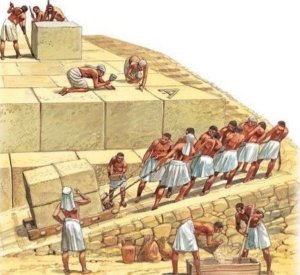
So: linguistic diversity is not really a problem, when there is money and total social control is achieved. Reflecting this large mass of foreign workers, in addition to Arabic, English, Hindi (30% of the population), Persian (5% of the population), Urdu and Malayalam are spoken in the UAE. They certainly know how to pass on orders to them, and it is clear from the skyline that they also get good results.
Conclusion
“– My building, sonny, goddammit – Giddings said.- Oh, it’s partly yours too, but I watched the start of excavation that went down eight feet to bedrock, and I watched them top out the steel fifteen hundred ad twenty-seven feet above grade, and I know every grillege, every column, every truss, every spandrel beam as well as I would know my own kids if I ever had any. (…)
His eyes went briefly to the distant Tower.
-I lost some friends too. On any big job you always do.”
(Richard Martin Stern. Skyscraper.)
«System change not climate change», demanded the most eloquent slogan launched by the climate movement. Over time, illusions fade, frustration sets in, and their reiterative demagogy diverts us from the real goals. Yes, reducing will be good. Yes, eliminating will be fine. But what we need is a change of system, to eliminate this crecentism, to eliminate this capitalist megalomania and unreason.
Responsibility is focused on household and individual consumption, and this should not be ignored and should be reduced, but attention is diverted from the heart of the problem: the consumption and emissions of big business and the rich.
We consume in a system of consumption in which consumption (redundancy notwithstanding) becomes the goal, not the satisfaction of needs. We consume because we maintain a system of growth, in which growth counts, building more hotels and more resorts, without stopping to see if they are full. What counts is to increase the number of visitors, tourists and profits. What counts is to increase the number of skyscrapers, and taller skyscrapers, without stopping to consider whether they are full. And continuing with the example that concerns us, that of the UAE: maintaining the same model (or worse) of tourist consumption, of incessant flights and transport, etc. Nobody puts it on the table. As long as we don’t change the model and the paradigm, everything else is irrelevant.
Writer: M. Mantxo (A Planeta)
NOTAS:
1From the English originals: https://archive.org/details/streetsshadows00acos/page/n15/mode/2up
2From the original English version: https://archive.org/details/towerster00ster/page/10/mode/2up
3Graves, Robert. The Two Births of Dionysus. Seix Barral 1980 (1964-71). Pag 46
3* A friend shares with me the theory of an archaeologist who argued that the Tower of Babel was a fable about how early empires collected material from all the different languages and cultures of the people they were trying to rule, in order to know how to govern them. As she points out, «this is the same way that Google does today». I like it too.
4* It was estimated that more than a thousand languages were spoken in Brazil at the time of discovery. Of them, 274 survive today. In the coastal region of Brazil, Tupinambá (Tupi language) was spoken, which became a lingua franca in this colony between the 16th and 18th centuries, and it was spoken until the 19th century. Then the Portuguese imposed their language. Therefore, at that time, many people would speak their native language, more Tupinamba as a Frankish language, more Portuguese as the new language of the administration, and even Latin in the church.
4Jimeno Jurío, José María. Las lenguas escritas y habladas en Pamplona. 1994
https://www.culturanavarra.es/uploads/files/04_FLV68-0051-0068.pdf
6 Ponting, Clive. A new green history of the world – The environment and the collapse of great civilizations. Vintage Originals, 1992. Pag 69-72
7Ponting adds to this the substitution of inappropriate crops, such as the substitution of barley for wheat, which also did not tolerate this salinisation.
8There is an extensive literature on the subject. See, for example: www.independent.co.uk/voices/comment/skyscrapers-are-the-architectural-equivalent-of-penis-extensions-8805788.html
9Some, such as 30 St Mary Axe in London or the Spire project in the same city, are so nicknamed. Others with an undeniably phallic shape, among others, are the Princess Tower and the Rose Tower, the Torch, the Emirates Crown, Damac Residence and Churchill Residence (all in Dubai), Agbar Tower in Barcelona or the Burj Doha (Qatar).
10https://timesofindia.indiatimes.com/life-style/home-garden/ever-wondered-why-the-worlds-most-popular-buildings-are-shaped-like-a-penis/photostory/73138996.cms
11Currently paralysed by corruption, its budget is 10 billion dollars.
12Although Donald Trump appears in it, it is not his skyscraper, the Trump Building, but the Plaza Hotel, also owned by him at the time. By the way, lately there has been an uproar (one more) because the director has accused Trump of imposing to appear in the film for using his hotel, something that he has flatly denied (like many other things).
14See also “Etxe orratzak, non dago muga?” https://zientzia.eus/artikuluak/etxe-orratzak-non-dago-muga
15According to its website, Iberdrola currently rents space to 50 companies, without knowing the size of each one or how much space is available. What does seem clear is that Iberdrola Tower is not fully occupied, as there is still an advert for renting space: https://www.torreiberdrola.es/alquiler-de-oficinas A local newspaper reported the high prices, «1,500 m2 floor for 40,000 euros per month» (www.deia.eus/bizkaia/2010/09/13/alquiler-medio-planta-torre-iberdrola-5619370.html). Last year (2022) it had the highest occupancy rate of 93% since it opened in 2009.
